Have you ever encountered problems like layering and oiliness, or a rough texture when drinking milk? Yogurt clumping and wateriness, milk tea base milk sticking to the walls and separating – these common problems all point to insufficient homogenization in dairy products. The “invisible hero” that solves all these issues is the ultra-high pressure HPP homogenizer.
In dairy processing, homogenization is a crucial step in determining the product’s taste, stability, and nutritional value, directly impacting market competitiveness. While not widely known to consumers, the ultra-high pressure homogenizer silently safeguards the smoothness and safety of every sip of milk – from everyday pasteurized milk and UHT milk to popular yogurt, milk tea base milk, and infant formula, almost everything relies on it. Today, we’ll talk about ultra-high pressure HPP homogenizers and see how they address industry pain points and bring a better drinking experience.
First, let’s understand: Why must dairy products be homogenized?
The main components of milk include fat, protein, and water. The size and distribution of fat globules directly affect the taste, stability, and digestibility of milk drinks. Unhomogenized raw milk has fat globules with a diameter of 1-10 micrometers and a density less than water. When left to stand, it floats to the surface and forms a skin, resulting in uneven fat distribution and a coarse texture.
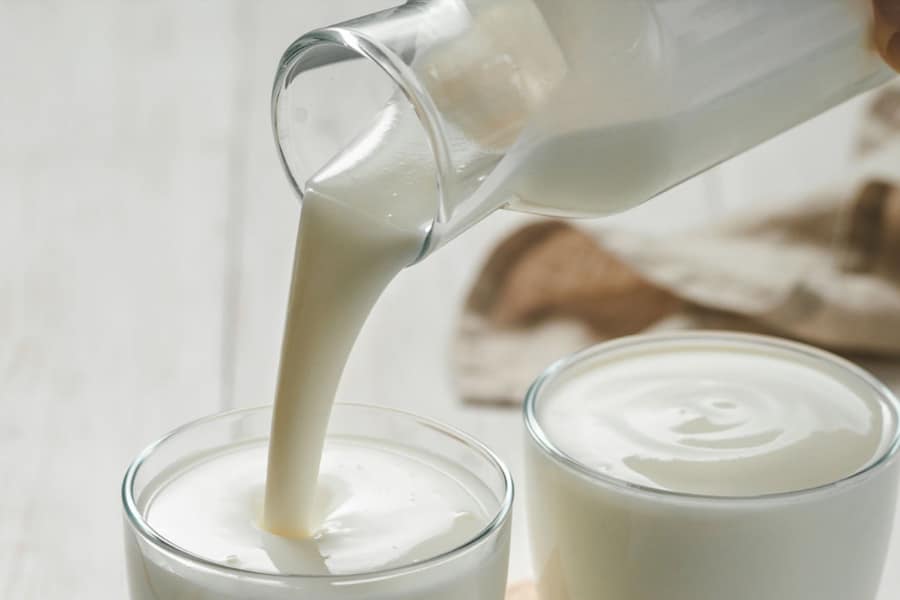
Unhomogenized milk, with its larger fat globules, is difficult for the digestive system to absorb, posing a greater burden on the elderly and children. It also tends to separate and settle, shortening shelf life. This is a core reason why niche dairy products are difficult to mass-produce. Deep-processed products such as yogurt and milk tea base milk require even higher homogenization standards: unhomogenized base milk tends to be greasy and clings to the sides of the container, masking the tea aroma. Infant formula milk powder requires even higher precision homogenization to ensure even nutrient distribution and suitability for babies’ delicate digestive systems.
Ultra-high pressure HPP homogenizer: Understanding dairy products better than traditional homogenizer.
As the quality requirements for dairy products increase, ultra-high pressure HPP homogenizers are gradually replacing traditional equipment, becoming the standard for processing high-end, functional dairy products. Its core difference from traditional homogenizer lies in its “high-pressure precision” and “gentle processing,” achieving a finer homogenization effect while preserving natural nutrients and flavor to the greatest extent.
The working principle of an ultra-high pressure HPP homogenizer is simple yet precise: a hydraulic system drives a plunger to pressurize dairy products to hundreds to thousands of megapascals (mainstream models can reach up to 420 MPa), then forces the material through a microporous spray chamber at near-subsonic speeds, forming a high-speed jet that achieves fine particle dispersion.
As the material passes through the spray chamber at high speed, it undergoes three synergistic homogenizing physical forces: shear force tears fat globules and protein aggregates, impact force refines the dispersed particles, and cavitation effect utilizes the energy from bursting bubbles to aid dispersion, resulting in more uniform homogenization.
Crucially, the entire homogenization process takes place in a closed environment equipped with a low-temperature cooling system to control material temperature differences, adapting to the heat-sensitive characteristics of dairy products. This maximizes the preservation of whey protein, vitamins, and other nutrients, as well as the natural milky aroma, avoiding nutrient loss and flavor degradation caused by the high temperatures of traditional equipment. Furthermore, all hygienic components comply with food GMP standards, ensuring the safety of the milk beverage.

For dairy products, its advantages go beyond just “refinement.” Ultra-high pressure HPP homogenizer empower dairy processing from multiple dimensions, not only improving taste but also contributing to quality upgrades, which is why they have become core equipment in high-end processing.
Firstly, a smoother, finer texture. Dairy products processed with this technology can have fat globules reduced to 0.1-0.5μm (even nanometer scale), with uniform particle distribution and a smooth, non-gritty texture. This is especially beneficial for infant formula, as the finer particles are easier for babies to absorb, reducing the burden on their digestive system.
Secondly, significantly improved stability. It allows proteins to disperse evenly, forming a stable emulsion system, completely resolving issues such as layering, oil floating, and sedimentation. Processed milk drinks maintain uniformity for extended periods at room temperature or under refrigeration, with milk not separating, yogurt not clumping, and base milk not sticking to the sides, significantly enhancing product reputation.
Thirdly, preservation of nutrition and flavor. Low-temperature homogenization technology avoids the loss of heat-sensitive nutrients, preserving the original flavor of the milk drink, making it richer and healthier—a core reason why high-end dairy companies favor it.
Fourth, it extends shelf life and reduces spoilage. A stable emulsification system reduces microbial growth, preventing product spoilage due to separation. The shelf life of liquid milk can be extended by 20%-30%, helping companies save on transportation and storage costs and improve efficiency.
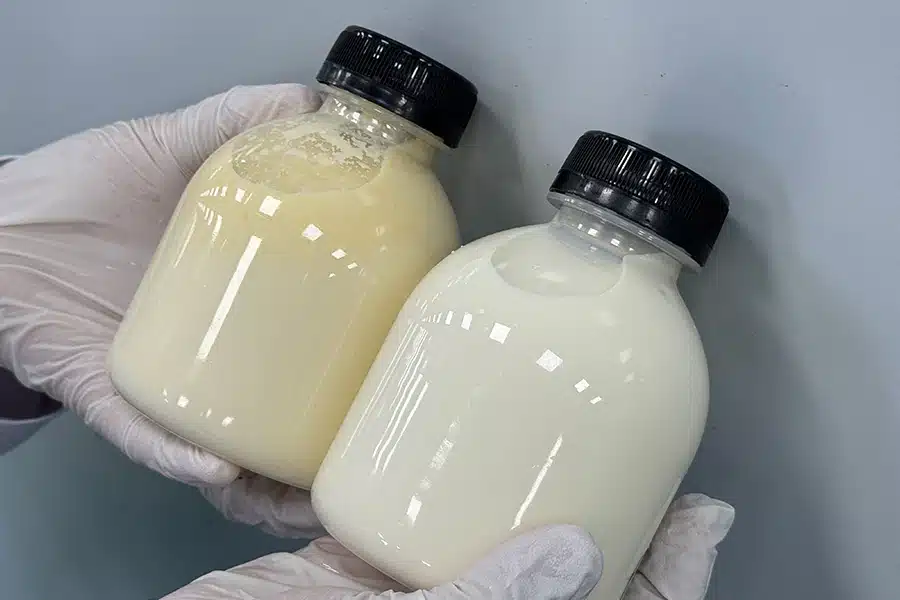
Industry Application Examples: It has already permeated our daily lives. Ultra-high pressure HPP homogenizer have long been integrated into daily milk beverage processing: a well-known dairy company’s high-end pasteurized milk uses this technology to refine fat globules to the nanoscale, resulting in a rich flavor and easily absorbed nutrients, becoming a bestseller in the high-end market; the base milk of many popular milk tea brands, after being processed by it, avoids greasy residue, achieving “pure milk flavor and no burden,” with a positive review rate exceeding 85%.
In the infant formula milk powder field, the raw milk for high-end products undergoes multiple rounds of ultra-high pressure homogenization to ensure uniform nutrition and fine particles, suitable for babies’ digestive systems; probiotic yogurt, after being processed by it, not only maintains a uniform texture but also protects the activity of probiotics, better regulating the intestinal flora.