Against the backdrop of the global manufacturing industry’s transformation towards high-end, green, and intelligent manufacturing, HPP technology as a cutting-edge process capable of altering the structure and properties of materials under extreme pressure conditions, is moving from the laboratory to large-scale production lines, becoming an irreplaceable core support for fields such as food, biomedicine, new materials, and new energy batteries.
HPP technology typically refers to high-pressure processing technology with pressures exceeding 300 MPa. With its unique advantages such as room-temperature processing, no chemical additives, and high uniformity, it breaks through the bottlenecks of traditional thermal and mechanical processing, driving the industrial chain up to higher value-added segments. This article will systematically analyze the definition, three core process principles, application scenarios, and industrial value of HPP technology, laying the foundation for understanding core equipment solutions for HPP.
Definition and Core Characteristics of HPP Technology
HPP technology is an advanced manufacturing process that applies static pressure far exceeding that of conventional industrial processing to materials using specialized equipment, achieving goals such as sterilization, homogenization, cell wall disruption, densification, and material modification without relying on high temperatures or adding chemical reagents. Based on application scenarios and process principles, mainstream ultra-high pressure (HPP) technologies can be divided into three main directions: HPP sterilization technology, HPP micro-jet homogenization technology, and HPP thermostatic pressure technology. These three technologies respectively target the fields of food preservation, fine dispersion, and material forming, constituting the technological foundation of the HPP industry.
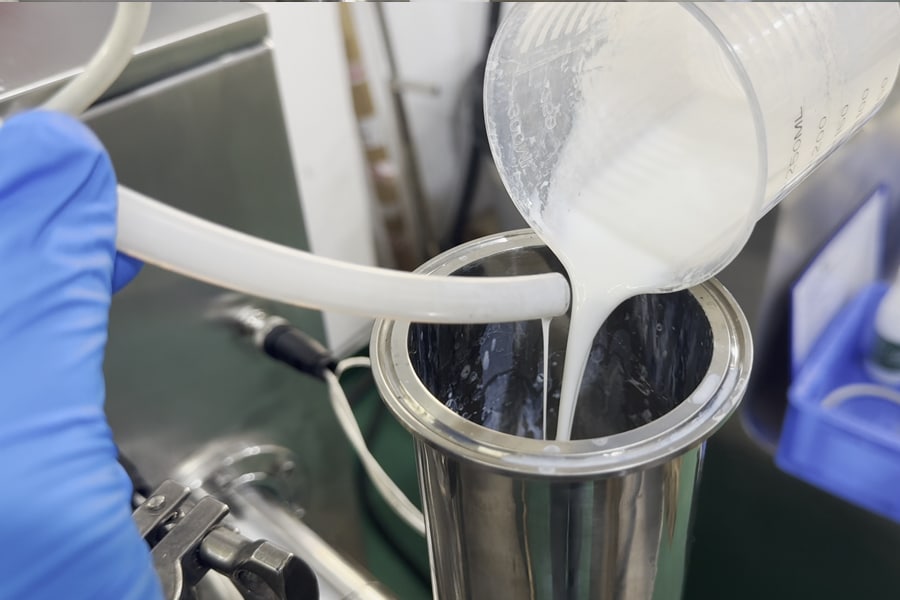
Compared to traditional processes, HPP technology possesses three irreplaceable characteristics:
- Cold processing characteristics: Operating at room temperature or low temperature throughout the process maximizes the preservation of the activity of heat-sensitive substances, avoiding nutrient loss, molecular structure damage, and flavor deterioration;
- High uniformity: Pressure is transmitted isotropically in the medium, resulting in uniform stress on the material, no localized stress concentration, and significantly improved product consistency;
- Green and environmentally friendly: Reducing heat energy consumption, the use of chemical additives, and wastewater and exhaust gas emissions, aligning with the “dual carbon” goals and the trend of green manufacturing.
These characteristics determine that HPP technology is not only a means of process upgrading, but also a key underlying technology driving the industry from “mass manufacturing” to “precision intelligent manufacturing.”
Three Core Ultra-High Pressure Technologies: Principles and Applications
Ultra-High Pressure Sterilization Technology (HPP)
Ultra-high pressure sterilization is currently the most mature ultra-high pressure process applied in the food industry. Its core principle is to use static high pressure of 100–600 MPa to penetrate packaging materials, destroying the cell membrane structure of microorganisms, leading to bacterial inactivation and death, thus achieving commercial sterility. The entire process requires no heating, completely preserving vitamins, active proteins, flavor substances, and texture in the food.
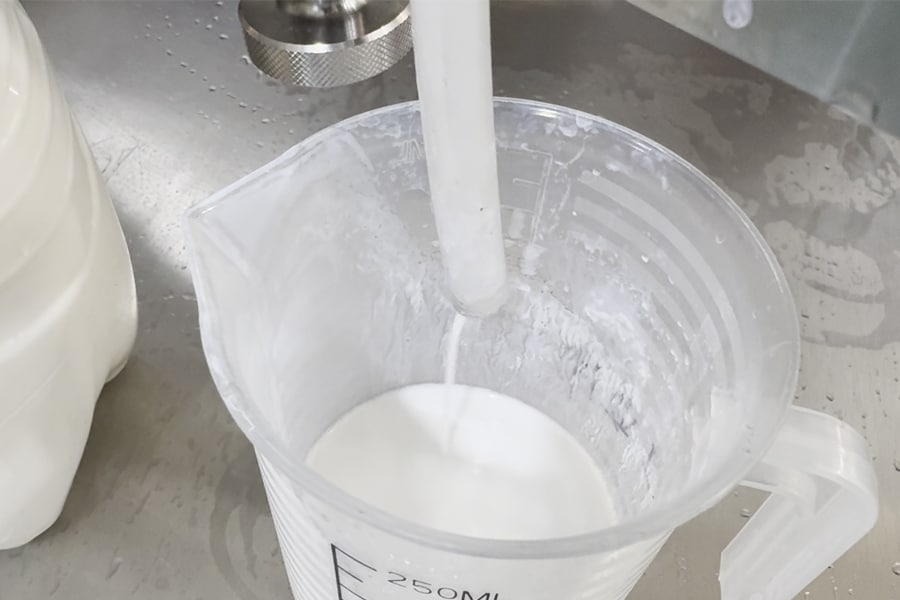
This technology is mainly used for cold sterilization of heat-sensitive foods such as fruit juices, dairy products, meat products, aquatic products, condiments, and ready-to-eat foods. Compared to traditional heat sterilization, ultra-high pressure sterilization can extend shelf life by 2–10 times, while avoiding problems such as browning, flavor dilution, and nutrient loss caused by heating. It is a standard process for high-end health foods and additive-free foods. Its core advantages are: cold sterilization, no residue, high fidelity, and suitability for continuous production of pre-packaged foods.
Ultra-High Pressure Microjet Homogenization Technology
Ultra-high pressure microjet homogenization is a key process for nano-dispersion, fine emulsification, and particle size control. By passing fluid through micron-sized jet channels at extremely high pressure, the material undergoes intense shearing, impact, cavitation, and turbulence within a very short time, achieving particle nano-sizing, uniform molecular dispersion, and emulsion stabilization. Processing pressures typically reach 100–400 MPa, and the homogenized particle size can be stabilized at the nanoscale with an extremely narrow distribution.
This technology is widely used in cosmetics, biopharmaceuticals, food, and fine chemicals, for example, in liposomes, nano-formulations, cell disruption, functional beverage homogenization, and pigment dispersion. For heat-sensitive drugs, active ingredients, and high-end cosmetic raw materials, microjet homogenization can improve absorption rate, stability, and fineness without damaging activity, making it a core piece of equipment for the industrial production of high-end formulations.
Ultra-high pressure warm isostatic pressing (HPP) technology
HPP is a core forming process for advanced materials and new energy devices. Under ultra-high pressure and a precise temperature field, powder or solid materials are subjected to omnidirectional uniform pressure, achieving material densification, defect elimination, enhanced interfacial bonding, and optimized microstructure. The pressure range typically covers 100–300 MPa, and the temperature can be flexibly adjusted according to material characteristics. It is widely used in high-end manufacturing of metals, ceramics, composite materials, and solid-state battery materials.
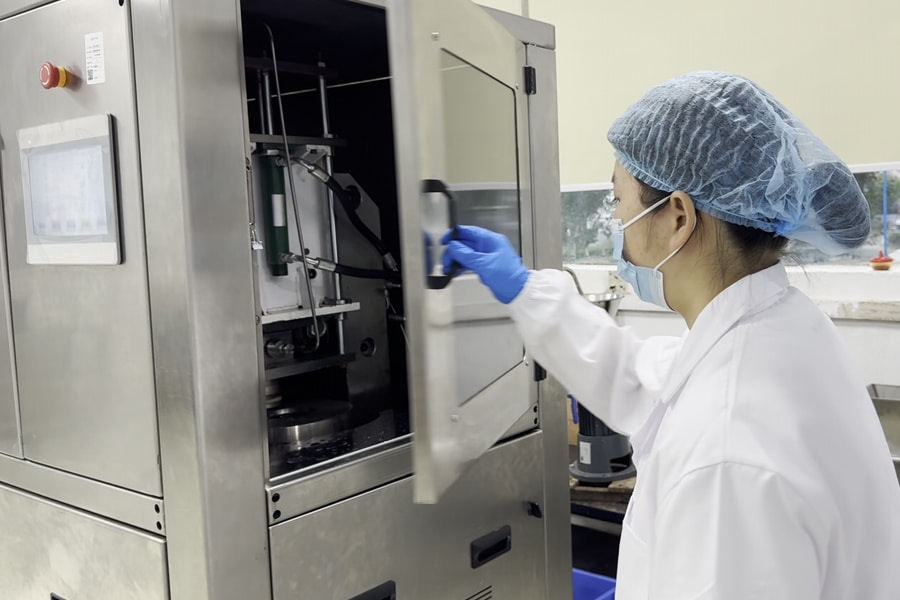
In the field of solid-state batteries, warm isostatic pressing is a core process for improving the density of electrolyte and electrode materials, reducing interfacial impedance, and enhancing cycle life and safety. It directly determines whether solid-state batteries can move from the laboratory to mass production. Furthermore, this technology is also used in the forming of high-performance ceramics, hard alloys, magnetic materials, and optoelectronic materials, significantly reducing porosity and improving mechanical strength and dimensional stability, providing key support for the industrialization of advanced materials.
The Core Industrial Value of Ultra-High Pressure Technology
The value of ultra-high pressure technology lies not only in improving the performance of individual products, but also in driving the upgrading of the entire industry chain:
- Product Quality Improvement: Cold processing preserves active ingredients, nano-level homogenization improves absorption efficiency, and high-pressure densification enhances material reliability;
- Industrial Structure Upgrading: It drives the transformation of food from “thermal processing” to “high-fidelity and health,” propels pharmaceuticals into the high-end nano-formulation track, and promotes breakthroughs in solid-state technology for new energy materials;
- Technological Substitution and Domestic Breakthrough: It replaces traditional heat treatment, chemical additives, and inefficient mechanical processes, while breaking the monopoly of foreign high-end equipment and reducing supply chain costs and risks.
Ultra-high pressure technology uses extreme pressures above 300 MPa as its core means, forming three major process systems: sterilization, homogenization, and material forming, covering four high-growth tracks: food, biomedicine, new materials, and new energy batteries. As an important extension of the precision flexible intelligent manufacturing platform, ultra-high pressure technology is upgrading from an auxiliary process to a strategic key equipment technology. The next article will focus on ultra-high pressure core equipment solutions, analyzing its definition, system composition, end-to-end service capabilities, and downstream core application scenarios.