The Malaysia Durian Festival has just concluded, and durian lovers around the world are willing to pay a premium for the golden, creamy flesh. Known as the “King of Fruits” in Southeast Asia, the durian industry has grown to over $100 billion. However, it faces a critical bottleneck in processing. High-temperature sterilization diminishes the unique flavor that makes fresh durian so special. Meanwhile, frozen preservation struggles to prevent microbial growth, which poses food safety risks. For both Malaysian producers and global processors, this processing dilemma has long limited market expansion—until now.

I. Industry Pain Points: Why Is Durian Processing a Dilemma?
Durian flesh is sweet and smooth, with a velvety texture and a complex, lingering aroma. It’s no wonder fresh durian is a sought-after delicacy. However, turning it into processed products is a challenge.
Problem 1: High-Temperature Sterilization Ruins Flavor
Durian’s unique aroma comes from over 200 volatile compounds. These include ethyl butanoate (fruity notes), dimethyl disulfide (the “durian scent”), and linalool (floral undertones). Unfortunately, these compounds are sensitive to heat. Temperatures above 60°C cause them to break down or evaporate. High-temperature sterilization, used to ensure food safety, destroys these fragile molecules. As a result, durian puree can lose up to 60% of its key aroma compounds after heat treatment. The result is a bland, muted flavor. Consumers have even said it “tastes nothing like fresh durian.” For brands, especially those offering premium Musang King and D24 varieties, this loss of flavor is a deal-breaker.
Problem 2: Frozen Preservation Fails to Inhibit Bacteria
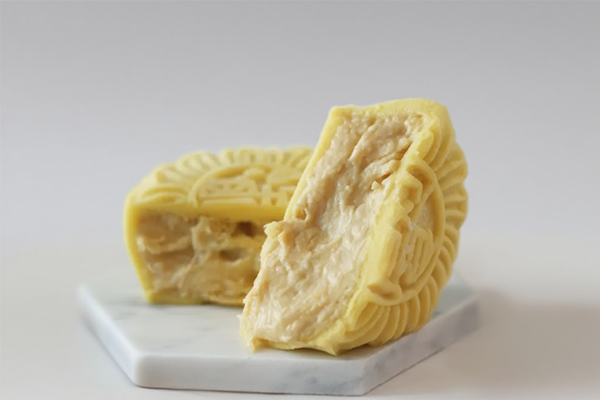
Frozen storage is commonly used to preserve durian products like ice-skin mooncakes, chunks, and purees. While freezing helps maintain flavor and texture, it doesn’t stop bacterial growth. Durian’s high sugar, fat, and protein content, along with its near-neutral pH (around 6.8), creates an ideal environment for microbes. Even at -18°C, bacteria like Bacillus species can go dormant but not die off. Research from Guangdong Academy of Agricultural Sciences found that frozen durian puree often has colony counts exceeding 7 logCFU/g—more than 10 times the safety limit for ready-to-eat foods. High bacterial loads can lead to spoilage, off-flavors, or foodborne illnesses. This puts durian processors, especially from Malaysia, at risk of losing consumer trust.
II. Technical Difficulties: Why Do Ordinary Methods Fail?
Ordinary High Pressure Is Insufficient
Durian’s neutral pH isn’t just a biological quirk; it’s a challenge for high-pressure sterilization. In acidic environments (e.g., citrus juices with pH <4.5), high pressure easily destroys microbes. But in durian’s neutral matrix, microorganisms become more resilient. Their cell membranes stiffen, and proteins resist damage.
This resilience is evident in lab tests. Gram-positive bacteria like Staphylococcus aureus and their tough spores need ultra-high pressure (500MPa or more) to be fully inactivated. At pressures below 400MPa, studies show little effect on bacterial counts. In one experiment, 400MPa for 5 minutes didn’t reduce bacterial numbers. Only 500MPa achieved a 3 logCFU/g reduction (a 1,000-fold decrease). This means medium-pressure HPP can’t guarantee food safety for durian products.
Spores Revive After Thawing
Bacterial spores are nearly indestructible in freezing conditions. They can survive for months in frozen storage. Once the product thaws, even partially, they come back to life and multiply quickly. This “revival effect” explains why frozen durian spoils quickly after thawing, making freezing or low-pressure HPP unreliable for sterilization.
III. Solutions: Breakthroughs in Ultra High Pressure Technology
HPP Sterilization for Fresh Durian: Balancing Food Safety and Nutrition
Applying 500MPa pressure for 5 minutes can inactivate most bacteria, ensuring food safety. Raising the temperature to 45°C during pressurization enhances sterilization by 30 times. Adding a small amount of nisin helps inhibit spores, extending shelf life. HPP preserves over 95% of sulfides, the key flavor compounds, keeping durian’s signature taste intact. For durian from Malaysia, HPP doubles shelf life under refrigeration, allowing more people to enjoy fresh and safe durian.
Microfluidic Homogenization Technology: Solving Texture Issues
Ultra-high pressure isn’t just for sterilization; it also improves texture. Microfluidic homogenization, using 3100Bar pressure, breaks down durian flesh into nanoscale particles (under 200nm). This creates a silky, ice-cream-like consistency and prevents fat separation during storage. “Liu Mang Yi Ke,” a leading brand, used this tech for their mooncake fillings, cutting flavor loss from 40% to under 5%. This innovation helped their 2023 sales exceed 100 million yuan. For Malaysian durian exporters, it means premium products that stay fresh and delicious.
IV. Commercial Value: Four Advantages Driving the Market
Ultra-high pressure technology is more than just a breakthrough; it’s transforming the business:
1. Extended Shelf Life: Duria Malaysia reports that HPP-treated durian puree stays fresh for 30 days under refrigeration—up from just 7 days frozen. This reduces waste and expands distribution networks.
2. Authentic Flavor Retention: HPP preserves 90% of volatile compounds (compared to just 45% with heat treatment), keeping the fresh durian flavor intact. This is crucial for consumers willing to pay premium prices.
3. Clean Label Appeal: HPP eliminates chemical preservatives, meeting global organic standards. This taps into the $100 billion organic food market, appealing to health-conscious consumers in Europe and North America.
4. Boosted Export Profits: Over 50 industrial HPP units in the Asia-Pacific region help producers like Thailand’s Durian Kingdom and Malaysia’s Duria command higher prices. After adopting HPP, their frozen puree exports saw 70% profit growth as buyers prioritize safety and quality.
With Thailand gaining access to China and Malaysia’s Musang King production up by 30%, the raw material supply is stronger than ever. Combined with rising global demand for safe, high-quality durian, ultra-high pressure technology is unlocking the potential of a hundred-billion-dollar market. Experts predict HPP durian products will grow by over 25% annually for the next three years, showing that ultra-high pressure is reshaping the industry.