In high-end manufacturing fields such as biopharmaceuticals, food and beverage, new materials, and cosmetics, the homogenization and nano-sizing of materials directly determine the quality, performance, and stability of the final products. HPP homogenizers, as core precision equipment for achieving ultra-fine dispersion, emulsification, and homogenization of materials, rely on HPP micro-jet homogenization technology to break down material particles and droplets to the nanoscale, achieving uniform mixing of components.
They have become indispensable key equipment in high-end production processes across various industries. This article will comprehensively analyze the working principle, core structure, performance advantages, mainstream application scenarios, and selection points of HPP homogenizers, interpreting the core value and application logic of this precision equipment.
The core working principle of an HPP homogenizer is to achieve nanoscale homogenization through physical processes
The core technology of the HPP homogenizer relies on HPP micro-jet homogenization technology. Unlike the low-pressure shearing method of ordinary homogenizers, it pressurizes the material to an HPP of 300-600 MPa, then forces the high-pressure material through micron-level micro-jet channels at supersonic speed. Multiple physical processes, including shearing, impact, cavitation, and turbulence, occur within the channels and at the outlet, instantly breaking down large particles and droplets in the material. This ultimately achieves ultra-fine dispersion, emulsification, and homogenization, resulting in nanoscale materials with uniform particle size and high stability.
Its working process consists of three key steps: First, high-pressure boosting, where a plunger-type booster pump pressurizes the material from atmospheric pressure to a set HPP, providing power for homogenization. Second, micro-jet impact, where the high-pressure material is forced into jet channels of 50-200 micrometers, forming high-speed micro-jet streams. Particles collide with each other and impact the channel walls at high speed, completing initial crushing.
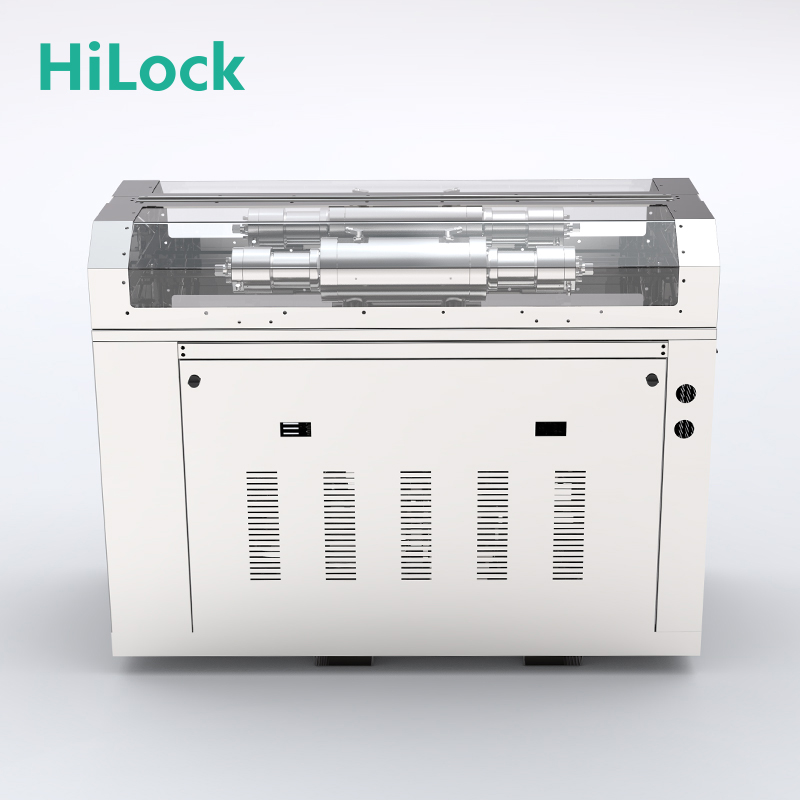
Finally, cavitation homogenization, where the pressure drops sharply as the high-speed micro-jet exits the channels, generating a strong cavitation effect. The shock waves formed by the instantaneous collapse of bubbles inside the material further break the particles to the nanoscale. The entire process involves no high temperatures or chemical additives, achieving material modification solely through physical processes. This maximizes the preservation of the material’s active ingredients and original properties, which is its core characteristic distinguishing it from other processing equipment.
The core structure of the HPP homogenizer, with multiple systems working in precise coordination to ensure efficient operation: The HPP homogenizer is a high-end piece of equipment integrating mechanical pressurization, fluid control, and precision machining. Its structural design directly determines the homogenization pressure, processing efficiency, and homogenization effect. The core consists of five major modules: the feeding system, the pressurization system, the core homogenization components, the discharge system, and the control system. These systems work in close coordination to ensure stable, accurate, and efficient operation.
The feeding system, composed of a feed pump, storage tank, and filtration device, is responsible for the stable and continuous delivery of materials to be processed to the pressurization system. The filtration device removes impurities and large particles to prevent damage to precision components. The feed pump features variable frequency speed control to adapt to the feeding requirements of materials with different viscosities and solid contents.
The pressurization system is the “power core” of the equipment. The mainstream version uses a plunger-type pressurization pump, which uses a motor to drive the plunger in reciprocating motion to achieve HPP pressurization of the material. Its sealing technology and plunger precision directly determine the equipment’s maximum working pressure and pressure stability. High-end models use imported precision seals to achieve high-pressure, leak-free operation, with pressure fluctuations controlled within ±5MPa.
Homogenization Core Components: The key area for ultrafine material crushing, consisting of micro-jet channels, homogenizing valves, and collision chambers. The channels are made of high-strength, wear-resistant materials such as hard alloy and sapphire, capable of withstanding high-pressure, high-speed impacts from materials. The homogenizing valves allow for precise control of the homogenization effect, while the collision chambers enhance particle impact and improve homogenization efficiency.
Discharge System: Composed of a discharge pipe, cooling device, and collection tank, this system transports the homogenized material to the collection tank. The cooling device reduces slight temperature rises during homogenization, preventing damage to the activity of heat-sensitive materials. The discharge pipe’s anti-clogging design is suitable for conveying nanoscale materials.
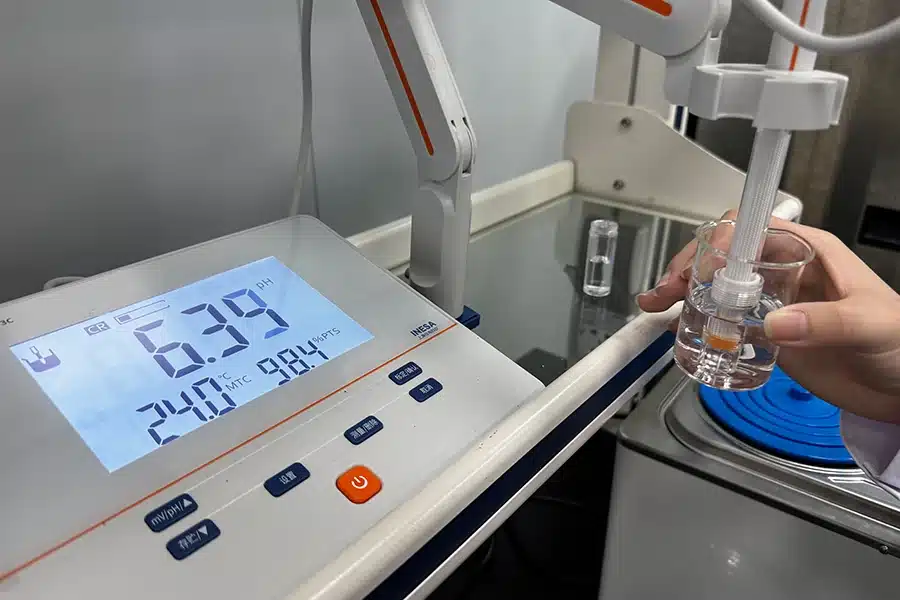
Control System: The equipment’s “intelligent brain,” composed of a touchscreen, PLC controller, and various sensors. It supports one-button setting of parameters such as working pressure, feed rate, and homogenization cycles, and monitors equipment operation status in real time, enabling automated continuous production. It also features overpressure protection, material shortage alarms, and fault self-diagnosis. Some high-end models also support data recording, remote monitoring, and process formula storage, meeting the compliance and intelligent requirements of industrial production.
The core advantages of HPP homogenizers: a comprehensive upgrade compared to traditional equipment
Compared to traditional material processing equipment such as ordinary high-pressure homogenizers, colloid mills, and high-speed shear emulsifiers, HPP homogenizers offer a comprehensive upgrade in homogenization effect, product quality, and applicability due to their nanoscale homogenization capabilities and green physical processing. They meet the stringent requirements of high-end manufacturing and have become the preferred equipment for high-end production in various industries.
- High homogenization precision, achieving nanoscale processing: This is the core advantage. HPP above 100MPa combined with micro-jet technology can break material particles to 10-200 nanometers, far superior to the micron-level effect of traditional equipment. Furthermore, the homogenized material has a uniform particle size distribution with no large particle residue, significantly improving the stability, solubility, and dispersibility of the material. The shelf life of the processed product can be increased by 3-5 times.
- Physical processing, preserving complete material activity: Homogenization is achieved entirely through physical processes, eliminating the need for emulsifiers, dispersants, or other chemical reagents. Material temperature rise can be controlled within 5°C, maximizing the preservation of heat-sensitive and active ingredients. Perfectly suited for processing high-end materials such as proteins in biopharmaceuticals, probiotics in food and beverages, and plant extracts in cosmetics.
- High processing efficiency, adaptable to the entire production process: The equipment offers a wide range of feed rates, from small laboratory models (0.5L/h) to large industrial models (5000L/h), supporting continuous production without batch processing. For some high-requirement materials, cyclic homogenization can achieve even better results, meeting the needs of laboratory R&D, pilot-scale amplification, and industrial mass production.
- Strong stability and long service life: Core components are made of wear-resistant and corrosion-resistant materials such as hard alloys, sapphire, and ceramics, capable of withstanding long-term impacts from HPP and high-flow-rate materials. With no vulnerable parts, the failure rate is low, and the core component lifespan can reach tens of thousands of hours. The precise sealing system ensures leak-free and noiseless operation, guaranteeing a clean and safe production environment.
- Widely applicable and suitable for various materials: It can handle materials in different states, including aqueous, oily, and paste-like substances, and is suitable for homogenization needs of materials with different viscosities and solid contents at pressures ranging from 1 to 10000 mPa. Whether it’s pharmaceutical solutions in biopharmaceuticals, dairy beverages in food and beverages, nano-slurries for new materials, or essences in cosmetics, it can achieve efficient homogenization and boasts extremely high versatility.
- Easy to operate and meets industry compliance standards: It features a touchscreen visual operation, allowing for one-button setting of process parameters, eliminating the need for specialized technicians. The piping and chambers are made of sanitary-grade 304/316L stainless steel, supporting CIP online cleaning and SIP online sterilization. It meets stringent standards in the pharmaceutical and food industries, including GMP and FDA, and has no unsanitary corners, making it easy to clean and maintain.
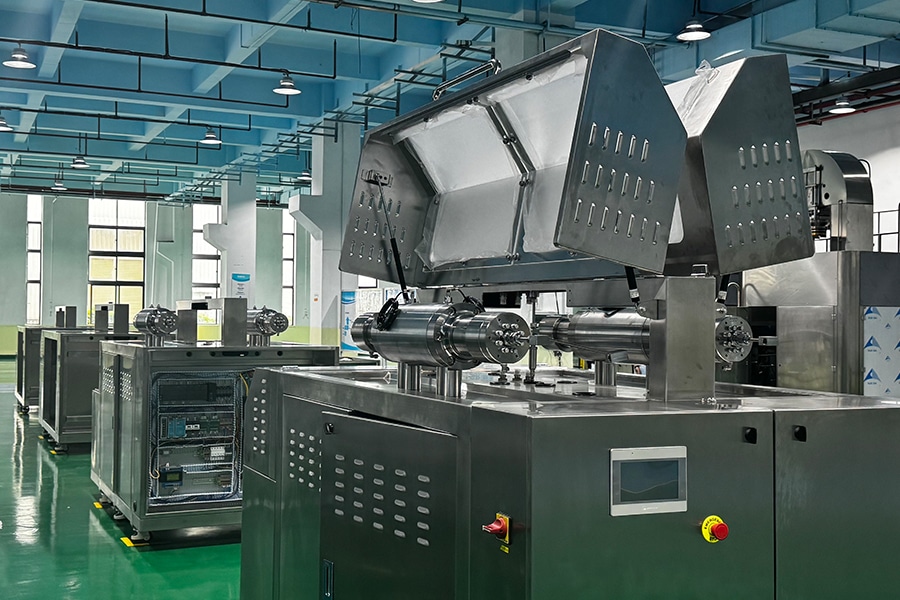
Mainstream Applications of HPP Homogenizers: Empowering High-End Manufacturing Upgrades Across Multiple Fields
HPP homogenizers, with their superior homogenization performance and wide adaptability, have become key production equipment in four core fields: biopharmaceuticals, food and beverage, new materials, and cosmetics. They play an irreplaceable role in high-end production processes across these fields, helping companies improve product quality and build core competitiveness.
- Biopharmaceutical Field: As core equipment for high-end biopharmaceutical production, HPP homogenizers are mainly used in the production of nano-formulations, injectable emulsions, biological vaccines, and protein drugs. They break down monoclonal antibodies and liposomes to the nanoscale, improving drug solubility and bioavailability; homogenize vaccine bulk solutions to enhance immunogenicity; and homogenize injectable fat emulsions to the nanoscale, ensuring drug stability and safety—a key factor for pharmaceutical companies to achieve product premiumization.
- In the food and beverage sector: It is applied to the production of high-end dairy drinks, plant-based protein drinks, fruit juices, and condiments, breaking down fat globules in cow’s and goat’s milk to the nanoscale, preventing product separation and improving taste and stability; solving the problem of protein particle aggregation in plant-based protein drinks, improving solubility; and refining fruit pulp particles in fruit juices, improving taste and extending shelf life, meeting the quality requirements of high-end food and beverages.
- In the new materials sector: It is widely used in the production of new energy batteries, nano-ceramics, and coatings and inks. It homogenizes electrolyte and electrode material slurries for solid-state batteries to the nanoscale, improving slurry dispersibility and uniformity, thereby increasing battery energy density and cycle life; it homogenizes nano-ceramic powders and coating slurries, preventing particle aggregation, improving material density and coating adhesion, and contributing to the performance upgrade of new materials.
- In the cosmetics industry: HPP homogenizers are key equipment in the production of high-end cosmetics, used in the production of serums, lotions, creams, and foundations. They homogenize active ingredients such as hyaluronic acid, niacinamide, and plant extracts to the nanoscale, improving skin penetration and enhancing skincare effects. They also refine foundation and lotion particles, improving skin feel and adherence, preventing caking and layering, thus contributing to the core quality of high-end cosmetics.
Furthermore, HPP homogenizers are widely used in pesticide, chemical, and biopharmaceutical testing fields. For example, they homogenize pesticide formulations to the nanoscale to improve efficacy, and homogenize chemical slurries to improve product stability. Their application scenarios continue to expand.
Key points for selecting an HPP homogenizer: Choose one that suits your production needs
There are many models of HPP homogenizers, with significant differences in pressure, throughput, and compatible materials. When selecting a model, companies need to comprehensively consider four core factors: usage scenario, material characteristics, process requirements, and brand service, ensuring a high degree of match between the equipment and production needs, and avoiding blind selection.
- Based on usage scenario: For laboratory R&D and pilot-scale production, choose small benchtop models with a processing capacity of 2-50 L/h, which are lightweight and easy to operate; for industrial mass production, choose large floor-standing models with a processing capacity of 300-525 L/h, supporting continuous production.
- Based on material characteristics: For heat-sensitive and active materials, prioritize models with cooling systems to control material temperature rise; for high-viscosity and high-solids-content materials, choose models with large-aperture micro-jet channels and high-power booster systems to avoid clogging; for corrosive materials, choose corrosion-resistant models with 316L stainless steel and ceramic components.
- Based on process requirements: For nano-formulations and solid-state battery slurries requiring high homogenization precision, choose HPP models above 300 MPa; for general food and cosmetic products with moderate precision requirements, choose conventional pressure models of 300-600 MPa, balancing effectiveness and cost; pharmaceutical and food companies should prioritize models with CIP/SIP functions to meet industry compliance standards.
- Based on brand and service selection: Prioritize manufacturers with core technology R&D capabilities and a good reputation to ensure stable equipment quality and performance; simultaneously focus on after-sales service, including installation and commissioning, operation training, after-sales maintenance, and spare parts supply. Comprehensive service ensures long-term stable operation of the equipment.
- Summary: As a core precision processing equipment relying on HPP micro-jet homogenization technology, the HPP homogenizer achieves nanoscale homogenization of materials through purely physical processes. While preserving the active ingredients of materials, it achieves breakthroughs in both homogenization accuracy and processing efficiency, becoming key equipment in high-end manufacturing fields such as biopharmaceuticals, food and beverage, new materials, and cosmetics.
Its five core systems work in precise coordination to ensure stable and efficient operation; its multiple advantages compared to traditional homogenizers allow it to adapt to the needs of various materials and production scenarios; and a scientific selection method helps enterprises accurately match production needs and maximize the value of the equipment.
With the rapid development of high-end manufacturing industries, the requirements for material homogenization and nano-scale processing in various industries continue to increase. The technology of HPP homogenizers will also iterate towards higher pressure, larger processing capacity, greater intelligence, and greater energy efficiency. The application scenarios will also be further expanded, providing stronger equipment support for the upgrading and development of high-end manufacturing industries and becoming an important guarantee for various industries to achieve product innovation and build core competitiveness.