Refined production has become a core competitive advantage across industries, where material homogenization, refinement, and dispersion directly determine product quality. The High-Pressure Processing (HPP) Microfluidization Homogenizer breaks through the bottlenecks of traditional homogenization technology, boasting nanoscale precision and high operational stability.
It is widely used in pharmaceuticals, food, advanced materials, and other sectors to help enterprises upgrade their products. This article fully explains its definition, core functions, and application scenarios.
What Is an Microfluidization Homogenizer?
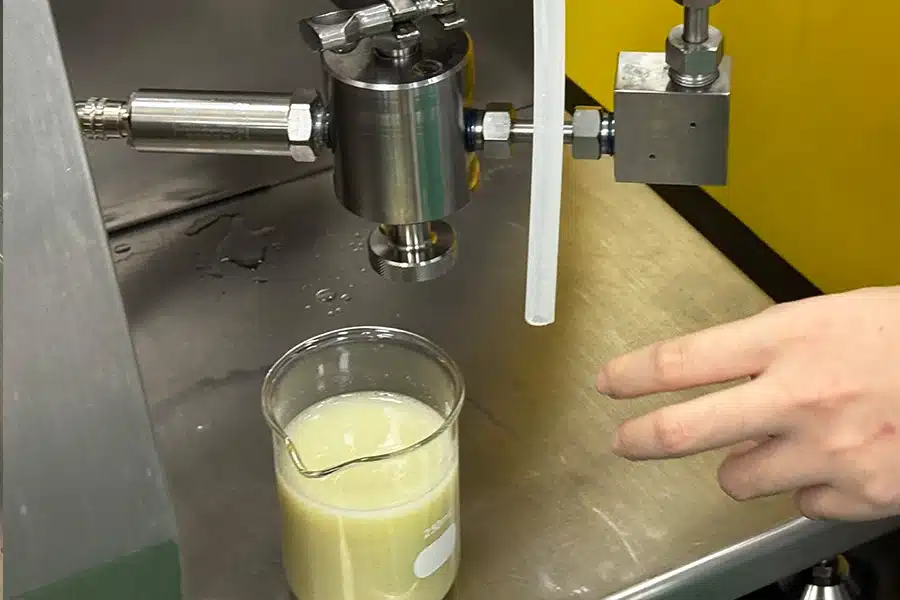
Based on HPP fluid dynamics, this microfluidization homogenizer achieves ultra-fine homogenization, dispersion, and emulsification through purely physical processing. Unlike traditional valve-type homogenizers, its key advantages lie in nanoscale precision and mild, high-efficiency performance, overcoming the precision limits of conventional equipment by leveraging advanced fluid mechanics.

Core Working Process
- A high-precision intensifier pump pressurizes materials to 100–420 MPa, forming high-pressure fluid.
- The fluid is forced into ultra-narrow microchannels (75 μm–500 μm in diameter) and accelerated to supersonic speed.
- High-velocity fluids collide within a diamond interaction chamber, generating shear, impact, and cavitation effects.
- Particles or droplets are reduced to 50 nm–1 μm. After cooling, homogenization is completed.
Compared with traditional equipment, it features no moving wear parts; fixed microchannels ensure consistent homogenization. Microsecond-level processing minimizes material loss, delivering narrow particle size distribution (PDI ≤ 0.2) and strong batch-to-batch stability, making it ideal for high-end manufacturing.
Core Functions of the HPP Microfluidization Homogenizer
Its functions focus on precision refinement, component protection, and efficiency improvement, effectively addressing key production pain points across various industries:
1. Precision Refinement & Dispersion: Solving Agglomeration
Through shear, impact, and cavitation effects, materials are refined to the nanoscale and uniformly dispersed, resolving agglomeration issues that plague traditional equipment. It handles liquids, semi-solids, and suspensions, achieving near-molecular mixing and stable systems for nanomaterials, high-end formulations, and other high-precision applications.
2. Mild Processing & Activity Preservation: Ideal for Heat-Sensitive Materials
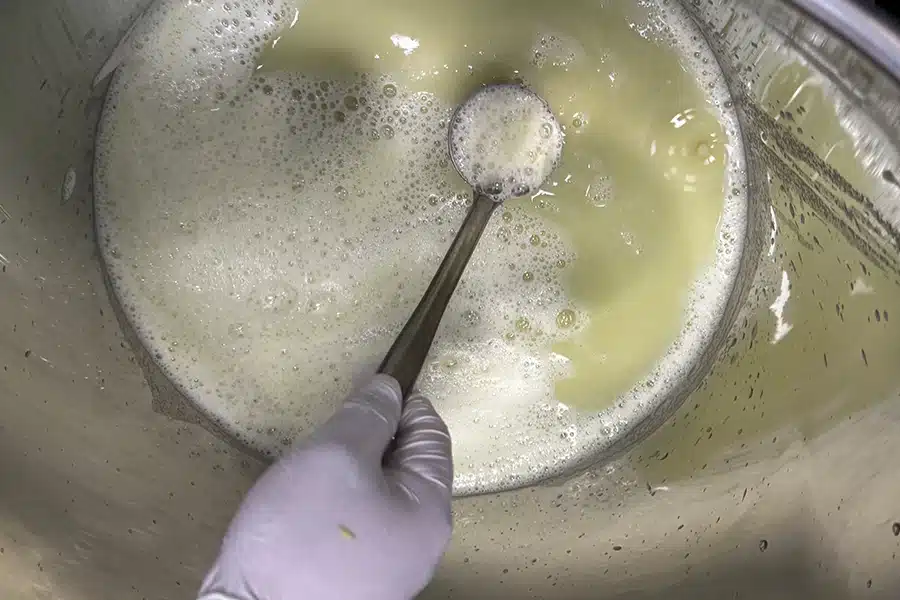
Featuring instant processing + real-time cooling, the material residence time in the homogenization chamber is extremely short, with temperature rise controlled within 10 °C. This preserves the activity of heat-sensitive ingredients such as food vitamins, pharmaceutical peptides, and cosmetic plant extracts, balancing ultra-fine processing with the integrity of core components.
3. Stable, Controllable & Cost-Effective
It supports wide pressure regulation (20–420 MPa), suitable for both small-batch R&D and large-scale mass production, and eliminates batch inconsistency in traditional production lines. Diamond core components are corrosion- and wear-resistant, enabling 24/7 operation with a service life of up to 8 years. Processing time is reduced from hours (with traditional ball mills) to minutes, greatly improving efficiency and cutting operating costs.
4. Versatile Material Compatibility: Breaking Phase Limitations
It is compatible with liquids (juices, pharmaceuticals), semi-solids (creams, pastes), and suspensions (traditional Chinese medicine oral liquids). Cross-phase mixing reduces the need for dedicated equipment, lowering investment and enhancing production flexibility.
Main Application Areas
With nanoscale refinement, mild processing, stability, and efficiency, the microfluidization homogenizer is widely adopted in high-end manufacturing, driving quality upgrades across industries:
Pharmaceutical Industry: Enabling High-End Formulations
It is a critical tool for developing nano-drugs, targeted formulations, liposomes, and nanomicelles. By reducing poorly soluble drugs into nanosuspensions, it improves absorption and supports precise drug delivery. Compliant with GMP standards and free of metal contamination, it is suitable for cell disruption, protein dispersion, and biopharmaceutical production, ensuring product purity and safety.
Food & Beverage: Creating High-End Healthy Products
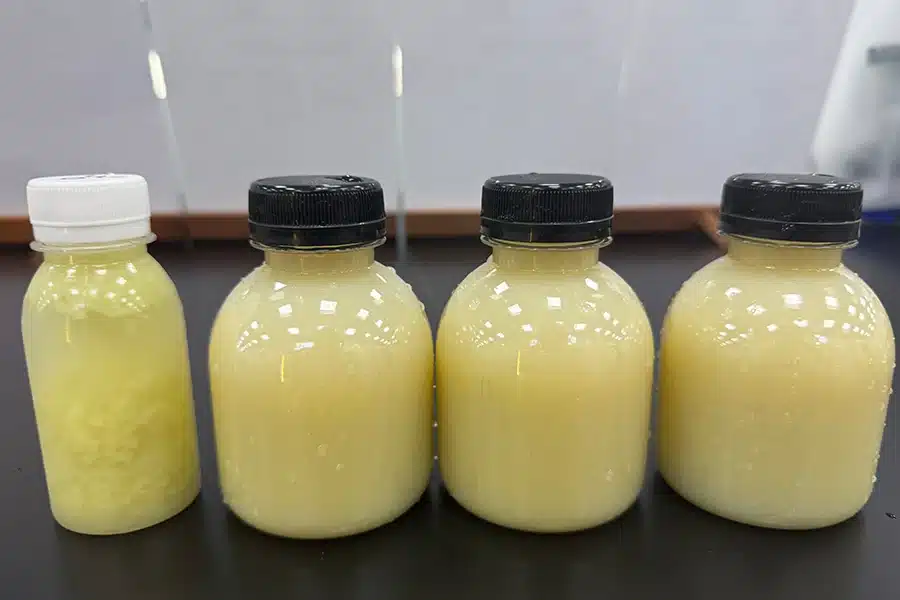
Aligning with industry health trends, it refines fruit particles in juices and functional drinks to enhance texture and retain nutrition. It optimizes plant protein structures for meat analogs and improves the stability of dairy products and nanoemulsions, extending shelf life and reducing the need for additives.
Cosmetics: Boosting Penetration & Efficacy
It nanonizes active ingredients (e.g., vitamin C, retinol) to enhance skin barrier penetration. It also refines emulsions and creams for a smoother texture, reduced pilling, and better stability, supporting brands in developing differentiated, high-performance products.
Advanced Materials & Electronics: Empowering Precision Manufacturing
It is used for graphene exfoliation, carbon nanotube dispersion, and MLCC ceramic slurry processing. By eliminating agglomeration and improving uniformity, it enhances mechanical and electrical performance, supporting the miniaturization and high performance of electronic devices.
Lithium-Ion & New Energy: Optimizing Electrode Performance
It refines and uniformly disperses silicon anode materials, alleviating volume expansion during lithiation to boost battery capacity and cycle life. Improved slurry dispersion lowers internal resistance and enhances conductivity, driving advancements in new energy batteries.
Conclusion: Unlocking New Possibilities in Refined Production
Powered by advanced fluid dynamics, the HPP microfluidization homogenizer features nanoscale precision and mild processing. It breaks through traditional technical limitations, becoming a standard piece of equipment for high-end refined production across industries.
From pharmaceutical formulations and food innovation to electronics and new energy, it continuously empowers industrial upgrading. As technology evolves, its applications will expand further, injecting new momentum into global refined manufacturing.